Which name belongs to this part?
Choose a clue, inspect its ring, then arrange all the syllable blocks. These are spelling pieces, not separate meanings.
Jumbled spelling blocks
Choose a spelling block to begin.
DESIGN INQUIRY · WAQA
What can you see before you know its name? Choose a view and a ring. Follow the part, compare the source clues, then decide what you would ask a sailor or builder.
01 · LOOK, THEN NAME
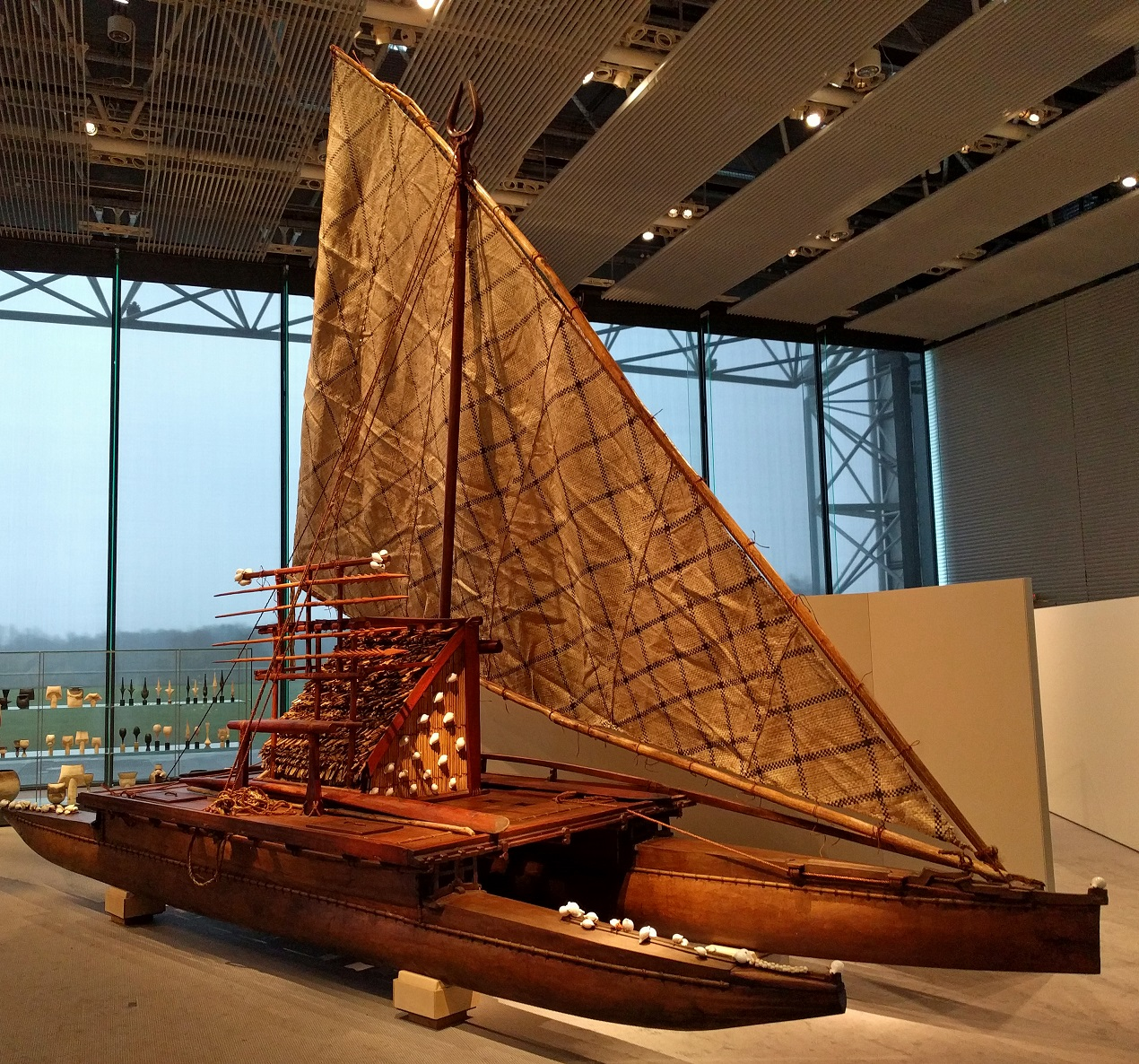
Choose a view, then tap a ring to reveal its Fijian name. The close-up marks the same point.
LOOK · BUILD · EXPLAIN · USE
Find a part in a view, build its name, then put a sourced or speaker-reviewed Fijian sentence together. Use those words and the evidence you find to explain an idea of your own.
Choose a clue, inspect its ring, then arrange all the syllable blocks. These are spelling pieces, not separate meanings.
Jumbled spelling blocks
Choose a spelling block to begin.
Tap the blocks in order, or drag them into the sentence. Tap a placed block to return it to the bank.
Jumbled Fijian blocks
Choose a block to begin.
Source context and language review: . The linked source may provide background rather than the exact sentence. Most sentences here were checked by a native speaker; the counting example still needs that review. English meanings and grammar roles remain working interpretations, not word-for-word matches or claims about every canoe.
Use a structure you just built. Replace its noun, then ask a speaker whether your new phrase sounds right in context.
Your practice phrase · needs speaker review
Look at your completed word from 01 and sentence from 02. Does the same name appear, does its form look different, or is this sentence about something else?
Build a part name and check a sentence to compare them here.
Complete 01 and 02 first.
Use the part name you built in 01. Compare what your completed sentence says about it with the new phrase you tried in 03. What can each phrase tell someone?
Sentence you built in 02
Complete a sentence in 02 first.
Pattern you started from
Your practice draft · needs speaker review
Bring together your part name, the completed sentence, and the noun change you examined. What can they help you ask about a real canoe part or skill?
Your completed word and sentence will appear here.
Complete the word, sentence, and noun-change comparison first.
Saved on this device. These frames are prompts for inquiry, not checked answers or automatic translations.
HERITAGE · SCIENCE · DESIGN · TOMORROW
Imagine a young Fijian designer beside this drua, asking a builder to trace the karikaritu down to the tau. Each name opens a design question: how the sail is held, how the two kata carry a load, and how a damaged part might be repaired. The next sketch could serve a short coastal journey, a fishing trip, or a boat carrying supplies where fuel is costly. Which idea is worth exploring?
People are already asking related questions. A Fiji National University proposal explores a sailing outrigger with a small backup motor and possible solar or wind assistance. A Pacific maritime presentation describes voyaging craft that bring traditional lashings together with modern navigation and solar-electric propulsion. These are other vessels and design efforts. They give us examples to question, test, and learn from as we study this drua.
The Uto ni Yalo Trust offers a living example in Fiji: its wind- and solar-powered canoe helps people practise voyaging, navigation and ocean care today. What might begin in your community if an experienced sailor taught one young person to read the wind—and that learner returned to teach another?
Names, measurements, experiments, and stories could all change the sketch. A learner might compare the hulls, test a small sail in different winds, ask a sailor where a rope leads, or ask a community which knowledge may be taught or adapted. Then comes the harder question: would a new boat actually be safe, useful, affordable to repair, and respectful of the people whose knowledge helped shape it?
One beginning is close at hand: choose a ring that might be wrong. Ask a knowledgeable person to show what they see, record their account with permission, and let that correction change the next drawing.
THREE DESIGN INVESTIGATIONS
Imagine a young Fijian who has travelled by outboard but has never learned to set a laca. A sailor invites them to name a part, feel a change in the wind, and help with a small supervised practice craft. What would make them eager to return and learn the next skill? Where could that skill matter on a journey people make today?
Begin with a Fijian part name, open its ring, and follow what someone does with it. Build a sentence about what you observe. Then combine a view, a source and a sailor's or builder's account to propose one thing to try. Which idea from this drua could guide a new design or a new way to teach? What evidence or local account could change your mind?
Know: name and locate the parts. Do: trace, describe and compare what they do. Decide: use the evidence to design a small trial, explain why it matters, and revise your idea.
Select an underlined Fijian name to find it in a view above.
Begin with the , the , and the . Which parts are timber, cloth or rope, and which can move?
Build the tools: point to each part in the rigging view. Build a related sentence in Activity 02, then ask a speaker how to describe one connection. Which word would tell you about the action or relationship?
Bring it together: draw the rope path you can actually trace, mark one uncertain link, and ask a sailor to demonstrate it. How might that demonstration become the first lesson in a local sail-skills practice group?
Look at the two , then follow the beneath the . Where might the weight travel?
Build the tools: name both hulls, the beam and the deck. Build the carrying-capacity comparison in Activity 02. Which words would you need to change to compare these hulls? Ask a speaker before using a new version.
Bring it together: combine your measurements, a sailor's weather limits and a familiar route in one proposal. What small, safe model test would tell you whether sail assistance could reduce fuel use without losing useful carrying space?
Compare the and the . A name can open a conversation about a place, its use, and a skill someone can demonstrate.
Build the tools: locate the house and the raised shelf, then use their names in a question to a knowledgeable person. What can the model show, and what can only a person explain?
Bring it together: with permission, plan one short lesson that pairs a Fijian part name with a real action, such as rigging, steering or repairing. What could the learner teach next, and what must remain in the knowledge holder's care?
Choose a question if it catches your attention. Open it to push the idea one step further.
Could the canoe type, community, time, or action explain the difference? Whose complete Fijian phrase and demonstration would you seek before deciding?
What would you measure besides length? How could a small model test load and wind, and what result would make you revise your first guess?
Could sail power, connected hulls, or repairable joins inform a coastal service or a modern ferry? What would you compare with today's option—fuel use, safety, cost, or local repair? Which small skill could a sailor teach on a safe first trial, and what might bring the learner back?
What can young people learn or document with permission? Which choices belong with builders, sailors, and communities, and how would their answer change your proposed design? How could more young people practise without placing all the work on a few knowledge holders?
The modern examples above are prompts for comparison. Neither source establishes that its design would work on this particular drua or route.
03 · KEEP EVERY TERM IN VIEW
Search the full supplied list. A model view or diagram is shown where the point can be located; the other terms stay in the research bank until the right model or demonstration is available.
These are translation research leads, not approved dictionary entries. Original spellings, current usage and boat type need review. Use the sources shown with each visible part as starting points for checking.
04 · COMPARE REAL FORMS
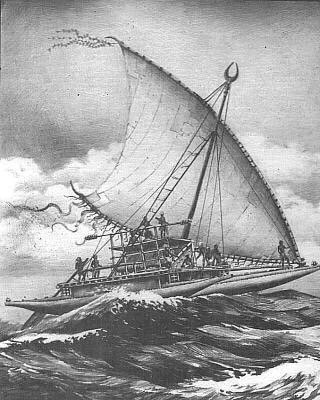
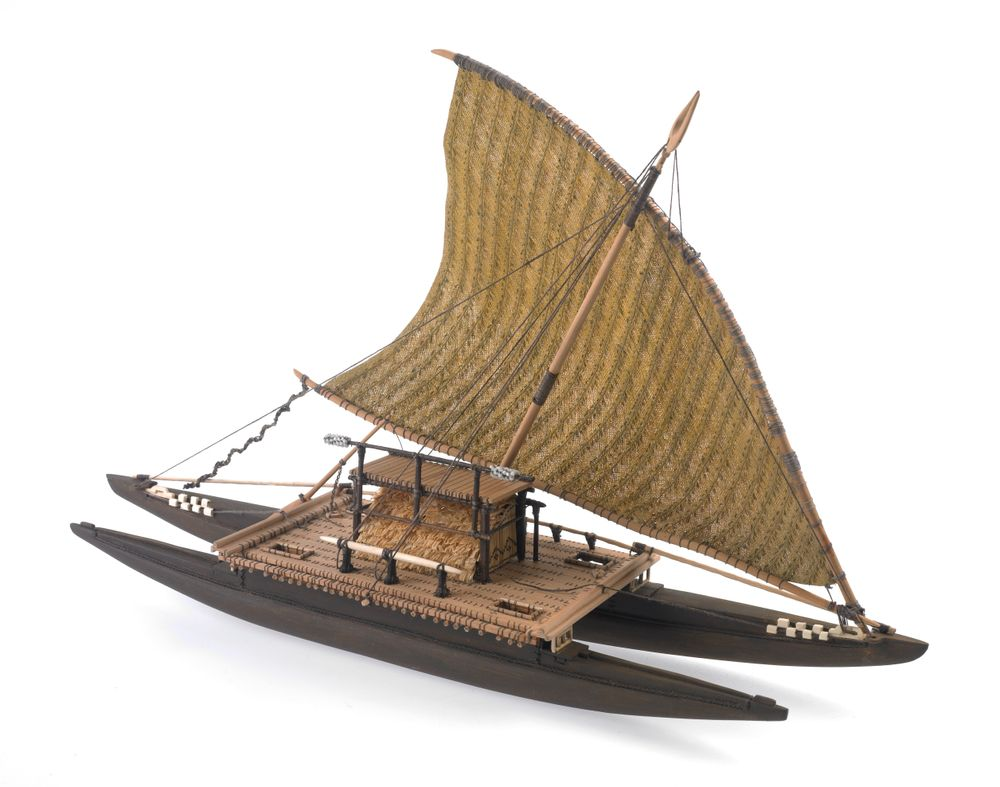
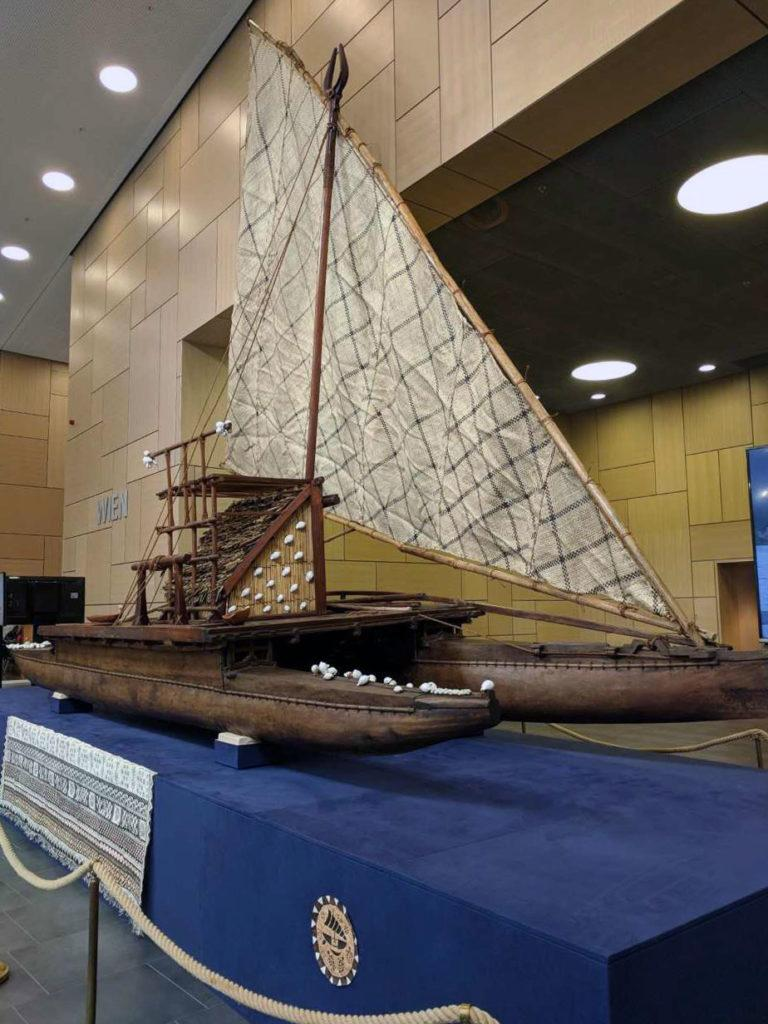
These images were supplied for comparison. If you know their original collection or creator, please use the correction form so we can improve attribution.